Nowhere Off the A77: Chasing a Summerisle That Never Existed
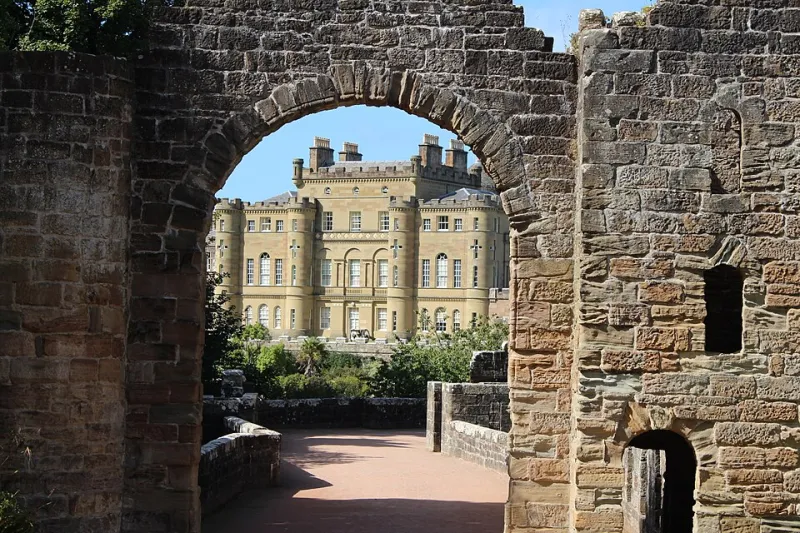
Photo: Billy McCrorie , CC BY-SA 2.0, via Wikimedia Commons
Every few years, someone on a forum asks the same question: where exactly is Summerisle? The honest answer is nowhere. The more interesting answer is everywhere the film borrowed from. More than fifty years after its release, The Wicker Man still sends people reaching for maps, and the maps keep failing them. That failure is not a bug. It is the whole point.
A Map Made of Borrowed Coastlines
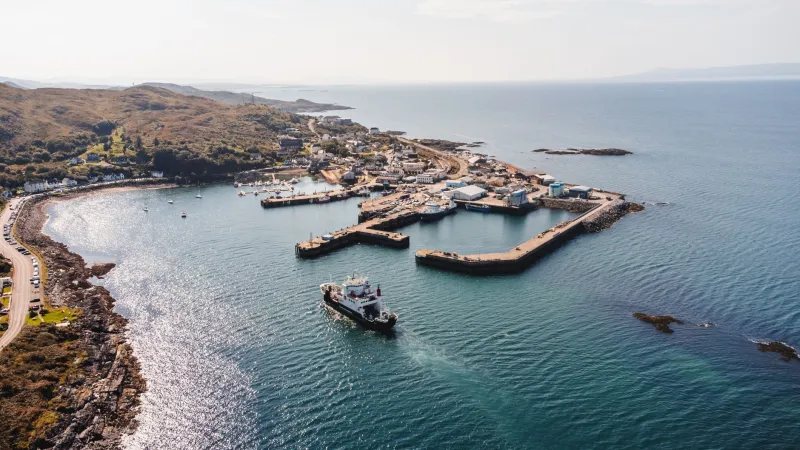
The production did not discover an island and point a camera at it. It assembled one. Culzean Castle in Ayrshire supplies Lord Summerisle's grand exterior. Plockton, in Wester Ross, gives the film its harbour and its sense of a village folded into the coast. Streets and corners in Dumfries and Galloway, Skye and around Loch Carron fill in the rest. These places are hundreds of miles apart. On screen, they sit within a short walk of each other.
That is not a criticism. It is a magic trick. The film's geography works because the textures match: wet stone, salt air, painted doors, grass growing where a council would probably rather it did not. Summerisle feels real because it is made of real things. It just is not made of one real place.
The Geography of a Dream
Think about what Howie actually visits. He lands on an island with a castle, a harbour, a pub, a school, a chemist, a post office, standing stones, cliffs, woods and enough farmland to support a harvest. No single British island offers that exact package in that exact arrangement. The film edits separate locations into a continuous world, and our brains accept it because the atmosphere is consistent.
This is where The Wicker Man becomes more than a location puzzle. It invents a Britain that never existed yet resembles one perfectly. The village hall, the distrust of outsiders, the old rituals humming under the surface of chapel and post office: it is a country of the mind, built from things we recognise. That is why the film's Summerisle feels truer than any tourism board's version of a Scottish island. It is a composite, and composites are how memory works.
The Pilgrim's Problem
The urge to visit is understandable. Folk horror makes pilgrims of us all. We want to stand where the frame was captured, to breathe the air the characters breathed, to prove that the place is real. Location hunting is a secular form of relic hunting. You go to Plockton and look for the harbour. You go to Culzean and look at the castle. Then you ask where the wicker man stood, and the answer is a field that is not there, or a set that no longer exists, or a spot on a cliff that the film invented through cutting.
The disappointment is the lesson. You cannot visit Summerisle because Summerisle is an edit. It exists in the gap between one location and the next. The film's geography is a rumour passed between real places. That is a very folk-horror idea: the place you are looking for is always one field over, one ferry away, one story out of reach.
A Very British Nowhere
British landscapes are good at this kind of absence. We have coastlines that turn into mud, roads that dead-end at water, islands that look close until the tide changes. The country is full of places that feel like Summerisle without being Summerisle. A village pub with low beams and no mobile signal. A churchyard with a strange stone in the corner. A caravan park out of season. The film did not invent the feeling. It collected it.
In 2026, location hunting is easier than ever. Satellite maps, fan wikis, behind-the-scenes documentaries and social media posts have flattened the mystery. You can find the exact coordinates of a shot in seconds. And yet the mystery survives, because coordinates are not atmosphere. You can stand in the right place and still be in the wrong film.
The Map Is the Monster
So what do we do with the real places? We visit them, carefully, and we accept that they are not the film. Culzean is a castle with its own history. Plockton is a working village, not a stage set. The coast of Galloway does not owe The Wicker Man a living. The respectful location hunter knows the difference between pilgrimage and ownership.
The real Summerisle is a rumour, a composite, a feeling that comes over you when the light is wrong and the sea is loud. It is not on any map. That is why we keep looking. The urge to find the place is itself the folk-horror impulse: we want the story to be true, we want the ground to remember, and we want to be the one who finally finds the way in. The film knows better. It gives us a Britain that never was, made from Britain as it is, and then it burns the map.