Maypole, Harvest, Pyre: Why Summerisle’s Calendar Is Folk Horror’s Cruellest Trick

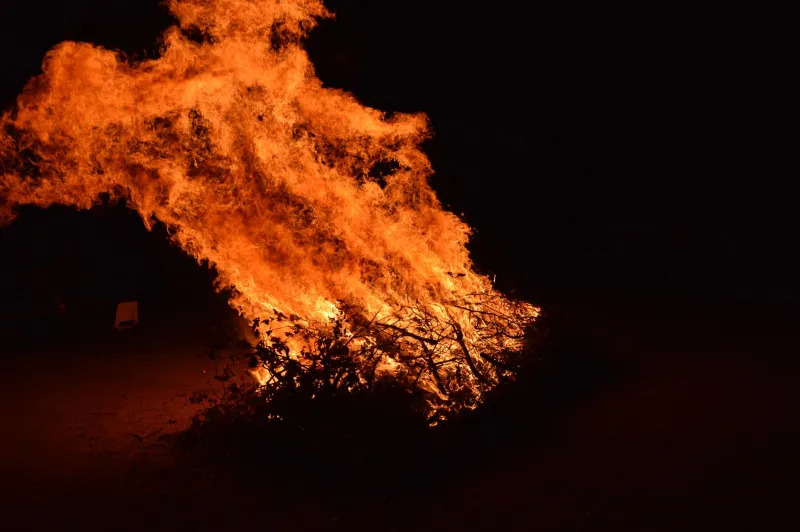
By the time November settles over Britain, the light has usually packed up by teatime and the heating is on before Countdown. It is a month that makes the idea of an island locked in permanent summer sound less like a holiday brochure and more like a threat. That, roughly, is the weather system of The Wicker Man — a film that gives us maypoles, harvest homes and a closing bonfire, but somehow never quite lets the year turn cold.
That absence of winter is easy to file under directorial oddity or the practical chaos of a low-budget shoot. But look closer and Summerisle’s calendar starts to feel less like a mistake and more like the engine of the horror. The island does not simply have a different weather forecast. It has a different relationship with time itself.
A Calendar With the Months Torn Out
From the moment Sergeant Howie lands, he is trying to impose a timetable. He has a missing girl to investigate, a mainland authority to answer to, and a return flight to catch. The islanders, by contrast, operate on ritual time: the maypole, the harvest, the bonfire. These are not dates on a wall calendar but events that seem to arrive when the community needs them, not when the seasons strictly allow.
The film’s own chronology is deliberately fuzzy. Howie arrives in what looks like spring — blossom, sunshine, a village fete atmosphere — and leaves, quite literally, in the middle of a harvest celebration that has spilled into a bonfire night. There are sudden dark nights after bright afternoons. There are crops and blossoms that seem to share the same week. No one is wearing a proper coat. The effect is not so much a seamless seasonal cycle as a collage of ritual moments, pinned together with song and cider.
That is folk horror in miniature. The old ritual year was never a tidy grid of months; it was a patchwork of obligations, feast days and thresholds. Summerisle has kept the obligations and binned the grid. What remains is a place where time is measured in duties rather than days — and where a policeman with a pocket diary is already at a disadvantage.
Daylight Rituals, Sudden Nights
The film’s lighting adds to the disorientation. Much of the early action takes place in broad, almost overexposed daylight: the schoolyard, the beach, the pub garden. These are scenes of community performance, and the sun makes them feel exposed and cheerful at once. Then night falls with a theatrical suddenness — the graveyard, the landlord’s daughter’s room, the hillside — and the island tilts into a different register.
In a normal British year, you can feel winter coming. The nights draw in, the air changes, the pubs get a bit quieter. Summerisle never gets that warning. There is no autumn decay to signal what is coming, no frost to slow things down. The film jumps from one ritual peak to another, and the absence of a quiet season is the absence of a chance to stop and think. Howie never gets a grey afternoon in which to reconsider his assumptions. He is always either in the middle of a festival or in the middle of a trap.
Crops Out of Season, Time Out of Joint
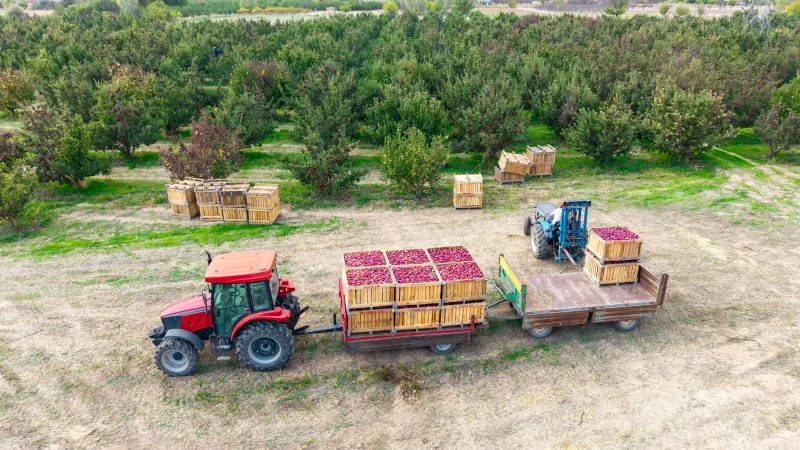
There is a well-worn observation that the island’s agriculture seems implausible — apples and blossoms and harvest all crowding into the same visual week. But that implausibility is doing useful work. Summerisle’s economy depends on a fantasy of abundance, and its calendar is built to serve that fantasy. The community needs the harvest to arrive on cue, the maypole to stand for renewal, and the bonfire to close the loop. Whether the actual weather cooperates is beside the point.
That is why the island feels both timeless and trapped. Timeless because the same rituals return with no apparent interval; trapped because nothing ever really ends. There is no winter death, no fallow period, no honest decay. The Lord of Misrule never leaves office. The maypole is always being raised, the harvest always being gathered, the wicker man always waiting to be filled. In folk horror terms, that is far more unsettling than a haunted house. A haunted house has a past. Summerisle has a loop.
Why Eternal Summer Is a Trap
British folk horror often draws on the anxiety of the seasonal turning — the sense that something old is buried under the parish boundary, the harvest festival or the bonfire night. The Wicker Man takes that anxiety and removes the relief of winter. There is no dormancy, no chance for the land to forget. The island’s rituals are not commemorations of a past season; they are attempts to keep the current one from ever closing.
For Howie, a Christian policeman with a linear sense of justice, this is intolerable. He wants an investigation with a beginning, a middle and an end. The island offers him a calendar with no exit. By the time the bonfire is lit, the film has made its point: a community that refuses winter is a community that refuses to let anything die naturally. It will choose its own sacrifices instead.
So when November closes in and the UK goes dark by four, there is a strange comfort in the ordinary misery of it. Winter is a deadline. It forces things to finish. Summerisle never got the memo — and that is exactly what makes it one of folk horror’s cruellest inventions.