Apples, Rent and Redress: The Hidden Economy of Summerisle
The Wicker Man is often discussed as a battle between Christian morality and pagan belief. Fair enough. But watch the film with an eye on the ledgers and a different story emerges. Summerisle is not simply a pagan enclave. It is a closed rural economy with one crop, one landlord and a calendar that doubles as a risk-management plan. The horror is not only that the islanders believe something strange. It is that their belief is administered, funded and enforced by the person who owns the land.
A one-crop island
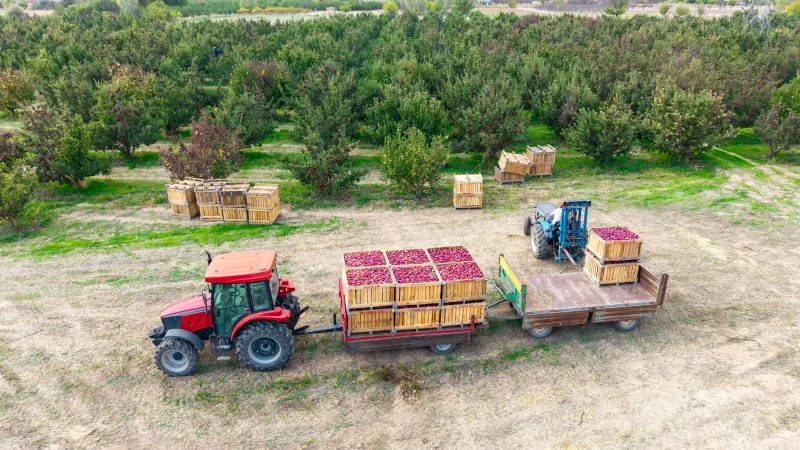
Summerisle lives off its orchards. Apples, trees, harvest, fertility: the film keeps returning to the same narrow economic base. That is the first thing to notice. A community dependent on a single harvest is a community with no cushion. One bad year is not a setback; it is an existential event. The island's paganism is presented as old custom, but it also functions as agricultural technology. The rituals are supposed to secure the crop. The maypole, the songs, the sexual licence and the final offering are all part of a system designed to keep the apples coming.
This is why the backstory matters. Lord Summerisle's grandfather is said to have introduced the old gods to improve the harvest. That is not just a religious conversion. It is an economic development strategy. The estate needed productivity, and paganism provided a useful story about why the land would yield. When the previous harvest failed, the system faced a credibility problem. A sacrifice is one way to solve it. In modern terms, the island is not praying for good weather. It is renewing an insurance policy.
The landlord as employer, letting agent and high priest
Lord Summerisle is not a distant aristocrat who occasionally pops by. He is the island's landlord, its chief employer and its ceremonial authority. He owns the land, dominates the local economy and presides over the belief system that justifies his position. That combination is familiar from British rural history. Company towns like Bournville and Port Sunlight offered housing and employment, but they also shaped how workers lived. Mining villages and tied cottages did the same with less benevolence. Summerisle is an extreme version: a place where the person who owns the fields also owns the story.
That is what makes it a company town with a sacrifice-shaped balance sheet. The islanders do not just rent their homes from the estate. They rent their cosmology. Belief becomes a condition of belonging, and belonging is a condition of work. The school, the pub and the doctor all operate inside the same social contract. The maypole is not only a fertility rite; it is a team-building exercise. The classroom is not only a place of education; it is induction. Dissent is not merely heresy. It is economic self-harm.
Howie as the auditor nobody wanted
Sergeant Howie arrives from the mainland as an outsider and a representative of the state. He thinks he is investigating a missing girl. In economic terms, he is conducting an audit. He asks questions, demands records and treats the island as a jurisdiction that should answer to him. The islanders, in turn, treat him as an external cost. He is a regulator who will not go away, a mainland nuisance who threatens the harvest by asking where Rowan Morrison is.
His disappearance resolves two problems at once. It addresses the ritual requirement and it removes the nosy inspector. The final sacrifice is not just theology. It is accounting. The risk is transferred to someone outside the community, and the books are made to balance. That is the film's sharpest trick. Summerisle does not sacrifice its own people. It makes an outsider pay.
The cost of belonging
For the islanders, belonging requires complicity. The economy rewards conformity and punishes awkward questions. This is not unique to fictional islands. Rural Britain has a long history of land concentration, tied housing and precarious agricultural work. Folk horror loves remote communities because they make those structures visible. The village can be a place of warmth and shared custom, but it can also be a place where the landlord's grip is exercised through access to work, housing and reputation.
Summerisle is extreme, but it is recognisable. The film understands that rural power is not only about violence. It is about dependency. If someone owns the fields, the cottages and the harvest, they do not need to threaten you very often. They can simply make the alternative unlivable.
A bonfire and a budget meeting
The Wicker Man is often praised for its atmosphere, its songs and its astonishing final image. All deserved. But its critique of land, labour and belief is sharper than its reputation suggests. Summerisle is not a random pagan colony. It is a fragile enterprise managed by a landlord who has turned faith into infrastructure. The final sacrifice is horrifying because it is also efficient. The crop may survive. The community may hold together. The outsider pays. In that sense, the film's most unsettling monster is not the wicker man itself. It is the balance sheet behind it.