One Bar of Terror: How the Dead Mobile Phone Became Folk Horror’s Favourite Villain
Folk horror has a new monster, and it is rectangular. It lives in your pocket, it has a cracked screen, and it says ‘No Service’ just when the hedgerows start closing in. We tend to talk about the genre’s terrors in terms of masks, maypoles and murderous villages. But the most reliable fright in British folk horror is not supernatural at all. It is a failed call.
From The Wicker Man’s pre-digital isolation to the rural not-spots of contemporary screen oddities, bad reception is the genre’s most dependable engine of dread. The dead mobile phone is not a plot convenience. It is the monster.
The terror of ‘Emergency Calls Only’
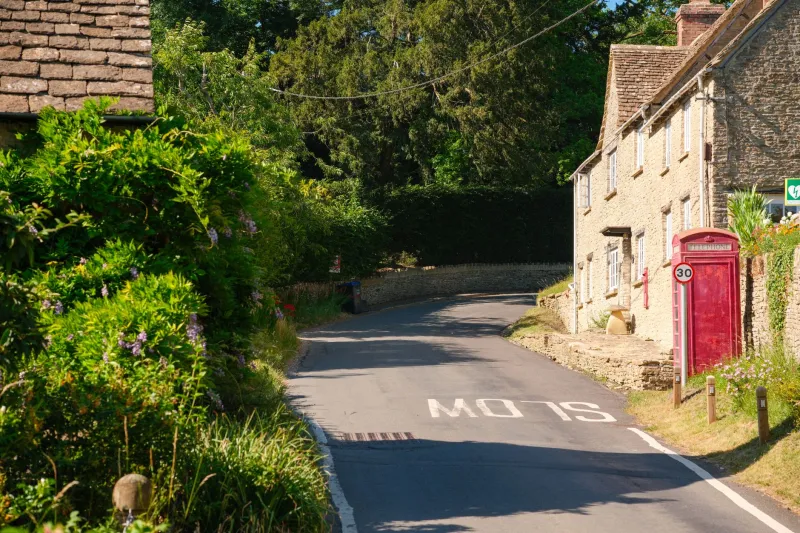
In the UK, we know the feeling. One bar outside a pub in the Cotswolds. A drive through the Lake District where the sat-nav gives up and the radio dissolves into static. A phone that can only make emergency calls is a beautifully cruel device: it promises rescue while withholding it. It is a talisman that lights up but does not work.
Folk horror has always been about outsiders who cannot reach the mainland. The phone just makes that isolation visible. The outsider arrives with modern authority—a police warrant, a camera, a research project—and then discovers that the village operates on older rules. The dead phone is the moment those rules win.
Summerisle had no bars, and that was the point
The Wicker Man did not need a mobile phone to make this point. Sergeant Howie arrives by seaplane, and from the moment he steps onto Summerisle he is cut off. There is no signal because there is no network. The island’s communication system is song, gossip, ritual and a landlord who knows more than he lets on.
That is the pre-digital version of the same terror. Howie’s authority depends on being able to call for backup. Without that, he is just a man in a uniform, singing the wrong hymns in the wrong pub. Summerisle does not need to jam a signal. It has already arranged the world so that no signal exists.
The not-spot as a folkloric boundary
Rural broadband is a modern problem, but folk horror turns it into an ancient threshold. The screen says ‘No Signal’ and the genre says ‘abandon hope’. The phone is a false talisman: it has maps, torches and cameras, but none of them can help you when the village decides you are the harvest.
Battery percentage becomes an hourglass. The charging cable is a useless umbilical. GPS spins in circles. A voice memo records something breathing in the back seat. The dead phone makes the landscape legible as hostile. It is not just that you are lost. It is that the place has already decided not to let you be found.
Smartphones make better victims than heroes
Modern folk horror understands that a phone is more frightening when it is present but useless. A camera that cannot capture the thing in the field. A map that leads back to the same crossroads. A call that connects to silence, or to a voice that knows your name. The phone becomes witness, betrayer and corpse.
The genre used to isolate outsiders by removing technology altogether. Now it gives them technology and then removes the network. That is a subtler torture. You can see the modern world in your hand, but you cannot touch it. The dead phone is a small screen showing you your own helplessness.
Why the dead phone beats the jump scare
Jump scares end. No signal persists. A dead phone creates sustained dread because it removes agency without removing hope. There is always the chance of one bar, a text that sends, a call that connects. That is why the horror works. It keeps you waiting.
It also says something about modern Britain. Rural communities can be beautiful, welcoming and deeply connected to their own histories. They can also be places where infrastructure thins out and the city’s assumptions stop working. Folk horror uses that gap—not as a cheap joke about the countryside, but as a way of making ancient fears plausible again.
The dead phone is the monster because it delivers the genre’s core promise: you are alone, and no one is coming. Not because the village is magic, but because the network has dropped. Next time your phone falls to one bar on a country lane, don’t panic. You are already in the film. Keep walking. And whatever you do, don’t follow the maypole.