Grid Reference Unknown: When the Map Is the Monster in British Folk Horror
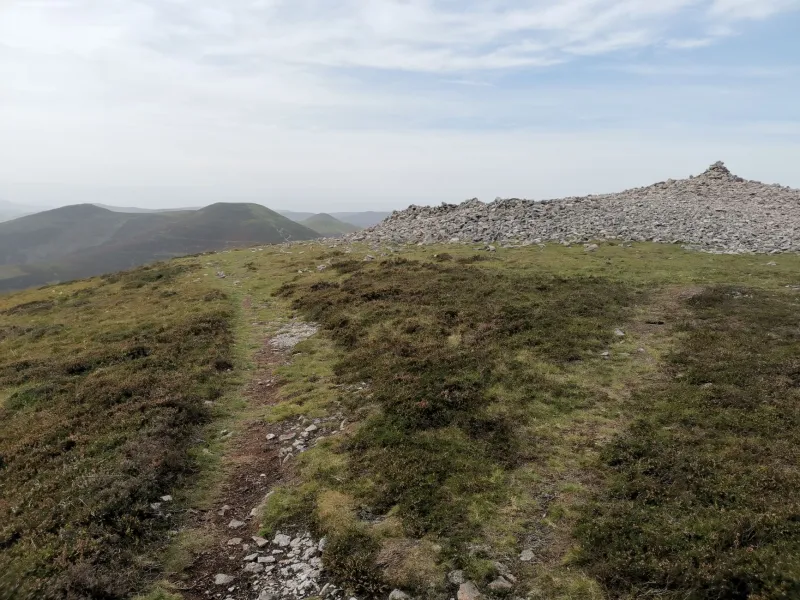
There is a particular kind of British comfort in an Ordnance Survey map. It is not just paper; it is a promise. The footpath is marked, the pub is named, the contour lines say the hill is steep but survivable, and the grid reference gives your panic a number. Fold it correctly and you are a competent person. Fold it badly and you are just another stranger standing at a gate in the wrong coat.
Folk horror understands that comfort better than most genres. It knows that a map is not a neutral sheet. It is a script with a legend. It tells you what counts as a place, what counts as a route, and who is allowed to pass. The scariest gesture in British folk horror is not the ritual at the end. It is the moment someone unfolds the map and says, with total confidence, 'It says there is a path here.'
The Legend Is Just a Key
Maps classify the world. They turn a hillside into 'access land', a ruin into 'disused', a chapel into a symbol, and a line through a field into a 'public right of way'. That language feels bureaucratic, almost boring. That is exactly why folk horror likes it.
In The Wicker Man, Sergeant Howie does not really carry a map. He carries an itinerary. Harbour, pub, school, castle, Lord Summerisle. It is a route disguised as an investigation. He follows the island's institutions as if they were grid references, trusting that a school is a school, a pub is a pub, and a helpful local is a helpful local. The islanders do not need to draw him a map. They simply let him believe he is reading one.
The terror is not that the map is wrong. It is that the map is accurate and still not on his side. The path exists. The place exists. The welcome exists. It is just that the welcome has already decided what he is for.
A Right of Way Is a Promise
British walking culture is built on the idea that a line on a map means something. A right of way is a legal fact, a small victory of ancient custom over private land. The Countryside Code asks you to close gates, keep dogs under control and take your litter home. The OS map asks you to trust the line.
Folk horror asks a different question: what if the line is real, but it is not for you?
The path crosses the field. The bull disagrees. The stile is broken. The gate has been tied shut with baler twine and a look. The map cannot show the silence when you ask for directions. It cannot show the way the conversation stops in the village shop when you unfold your laminated guide. It cannot show the difference between a footpath and a route that has been agreed by people who do not want you to reach the end.
That is the tyranny of the map. It makes the stranger feel like a participant. In folk horror, they are usually the cargo.
Contours as Confession
Contour lines are wonderfully honest. They show you the shape of the land without pretending it is easy. A cluster of tight lines means effort. A wide spacing means relief. What they cannot show is mood. They cannot show exposure, or the way a ridge can feel like a stage, or the fact that the valley below is not empty but watching.
Folk horror uses landscape like that. A Field in England turns a field into a hallucination with no reliable edges. Enys Men makes an island feel like a map that keeps redrawing itself. The Borderlands puts old stones and old rituals at the end of a professional investigation. In each case, the terrain is not just scenery. It is an argument about who belongs.
The old mapmakers wrote 'here be dragons' in the blank spaces. Modern Ordnance Survey maps are too thorough for that. They name almost everything. But the blank space in folk horror is rarely geographical. It is social. It is the space between the footpath and the welcome. It is the bit of the map that says 'you are here' without saying 'you are not from here'.
The Laminated Guide to Your Own Undoing
There is a special kind of false comfort in a laminated trail guide. It has been produced by someone, probably with a clipboard. It has a route, a distance, an estimated time and a little box that says 'easy'. It is designed to make a strange place feel manageable.
In 2026, that guide is just as likely to be a phone screen with a blue dot that updates in real time. But the principle is the same. The device says you are on the path. The path says you are on the path. The locals say nothing at all.
Folk horror loves that gap between data and consent. A map can tell you where to walk. It cannot tell you whether the walk has been arranged. A guidebook can tell you the pub is dog-friendly. It cannot tell you what the landlord does with the names in the guest book. A grid reference can tell you exactly where you are. It cannot tell you why the nearest farmhouse has no lights on and the curtains are still moving.
The map is a consent form, and the stranger has already signed it.
Howie's Itinerary
Return to The Wicker Man. The film is often remembered for the songs, the maypole, the burning. But its structure is deeply cartographic. Howie arrives with a purpose and a list. Every helpful islander gives him a direction. Every direction leads to another appointment. The plot is a guided tour with a trap at the end.
The scariest thing about Summerisle is not that it is unmapped. It is that it has been mapped so well that Howie never notices he is being routed. The map has no contour lines for dread. It has no symbol for a community that has already decided where you belong. It just has a path, and he follows it.
That is the genre's most patient trick. Not the ritual. Not the reveal. The moment a stranger trusts a map that has already decided their place in the story. The map is not the territory. In folk horror, it is the trap.