The Raffle Ticket Is a Summons: Village Fetes and Folk Horror's Polite Conscription
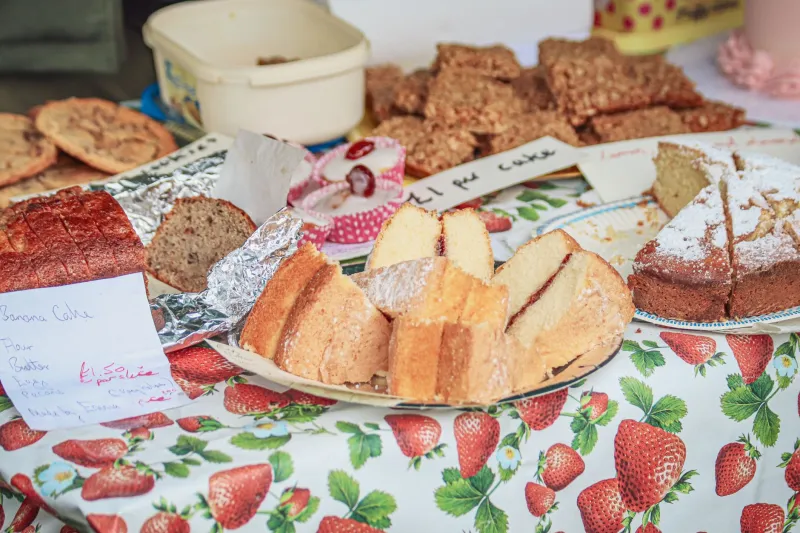
There is a particular smell to a village fete. Cut grass, hot dust, a hint of diesel from the generator running the urn. Someone's nan is selling raffle tickets from a fold-out table. A child is crying near the coconut shy. The vicar is pretending not to notice that the WI cake stand has been positioned with military precision opposite the beer tent. It all feels timeless in the way that a Sunday afternoon feels timeless — until you notice that everyone is watching everyone else, and that you have been standing in the same spot for twenty minutes because leaving would require an explanation.
That is the fete's real function. Not fundraising. Not community spirit. It is a census with bunting. And folk horror knows it.
The Fete Is a Machine for Measuring Belonging
Think about what actually happens at a village fete. You arrive. You are seen arriving. You buy a raffle ticket, which is less a charitable donation than a receipt of presence. You judge the jam. You are judged for not judging the jam properly. You stand near the produce tent and admire a marrow you have no intention of buying. You make small talk with a man who knows your car. By four o'clock, the parish has a full ledger: who came, who bought, who volunteered, who left early, who looked at the coconut shy and walked away.
In folk horror, being counted is the first step to being chosen. The raffle ticket is a summons. The tombola is fate with a handle to turn. The cake stall is communion, and you had better take a slice.
Howie and the Sin of Not Joining In
The Wicker Man is the obvious text here, but not for the reasons people usually give. Sergeant Howie's problem is not that the islanders are pagans. It is that he will not buy a ticket. He will not enter into the social contract of the fete. He refuses the maypole, the sword dance, the snail race, the whole choreographed apparatus of belonging. He stands at the edge with his clipboard and his frown, and the islanders are unfailingly polite about it. That politeness is the trap. In Summerisle, a fete is not a day out. It is a test, and Howie fails by treating it as a crime scene.
The fete does not need to threaten you. It only needs to notice that you are not playing along. In a small community, that is enough. You become the outsider not because you are rude, but because you are not participating correctly. And once you are the outsider, the raffle can be drawn without you.
The Tombola Never Lies (Except It Does)
A tombola promises randomness. You pay your fifty pence, you spin the drum, you win a tin of soup or nothing at all. But the village knows the odds. The village knows who donated the prizes. The village knows whose name is on the winning ticket before the draw is made. In folk horror, chance is never chance. It is providence, or punishment, or a polite way of telling you that you were never really in the running.
Doctor Who understood this in 1971, when The Dæmons staged a village fete as cover for a summoning. Hot Fuzz understood it too, turning the civic fete into a stage for murder disguised as accident. The fete is where the community performs its own goodness so convincingly that nobody asks what the proceeds are really funding.
Coconuts, Cakes and Sanctioned Violence
The coconut shy is a row of heads on sticks. Let us not pretend otherwise. You pay to throw a wooden ball at them, and everyone cheers when one falls. The cake competition is a public trial of your neighbour's sponge. The produce tent is a display of fertility totems: oversized marrows, perfect onions, eggs arranged like offerings. Under the bunting, the fete licenses small cruelties. It lets you judge, throw, exclude and compete, all while smiling and saying 'lovely day for it'.
The Wicker Man does this explicitly with its May Day games — the sword dance, the maypole, the whole pretty theatre of violence. But the quieter version is the fete. It is violence with a tombola in front of it.
The Exit Problem
You cannot leave a village fete early without explaining yourself. That is the rule. 'Oh, you're off already?' 'Everything all right?' 'You haven't seen the raffle drawn.' The fete is a roach motel: you check in, you don't check out. Howie's plane on the beach is the exit he cannot take, because the island's politeness has already closed around him like a hand.
That is why the fete is folk horror's perfect trap. It does not need monsters, or ghosts, or a man in a wicker suit. It only needs a raffle ticket, a slice of victoria sponge and a community that has decided, very politely, that you are not leaving until the draw is made. Roll up. Roll up. You are already counted.