Cut It Out: Why the Longer The Wicker Man Is the Lesser The Wicker Man
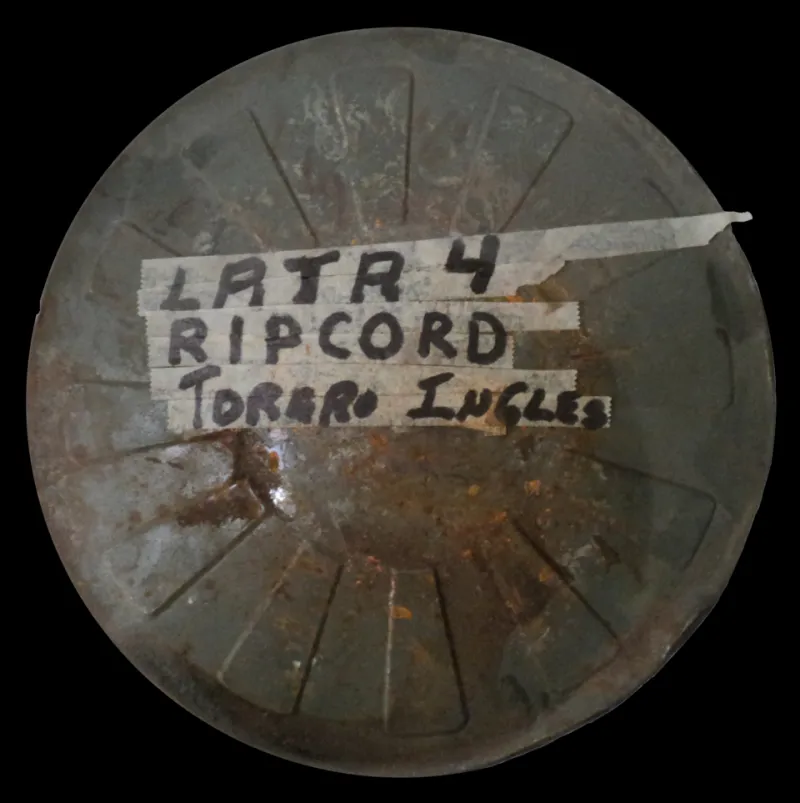
Photo: mannyisdead on Deviantart, CC BY 3.0, via Wikimedia Commons
Folk horror runs on heresy. Summerisle is a community built atop a discarded faith, after all. So consider this a modest contribution to the tradition: the long cut of The Wicker Man is the wrong film, and I'd like the short one back.
Let me be clear what I'm not saying. I'm not saying the extra footage is dull. I'm not saying anybody destroyed a masterpiece. I'm saying the version most readily available to modern viewers, the one everyone recommends to the friend who hasn't seen it, is a film that explains too much, sings too long and looks, for long stretches, like a recording of a recording.
Three cuts, one argument
The Wicker Man exists in a small family of versions, and the family does not get on. There's the theatrical cut — lean, elliptical, cut for a 1973 British double bill, running in the high eighties with the minutes flying past. There's the long version, assembled decades later from a tape that had spent years in a box, restoring scenes nobody had seen since the edit. And there's the 2013 final cut, a diplomatic compromise of roughly ninety-four minutes that Robin Hardy signed off on.
The final cut is perfectly good. The long version is a fascinating artefact. But the film that once frightened a generation of night-trippers — the one that arranges its information like a trap rather than a guidebook — is the leanest of them.
The problem isn't length, it's explanation
Here's the crucial missing scene, and it's the one I'd happily lose forever: Howie on the mainland, at a church service, his fiancée at his side, the whole apparatus of his faith laid out for us in a quiet, respectable sequence.
And there, in a nutshell, is the damage. Because the short cut never tells you who Sergeant Howie is. It infers him — a uniform, a clipboard, a set of assumptions about what a policeman may ask and a villager may refuse. You spend the first act building him from evidence the way he builds his case. His rigidity is funny and alarming because we're never given permission to pity him.
Add the church scene and the mystery collapses into diagnosis. Oh, we think, he has a fiancée and a congregation and a nice life waiting. Now we understand him. Now we can place him. Now we can relax — and The Wicker Man dies a little every time an audience relaxes.
Gently Johnny, please don't
I know. I know. "Gently Johnny" is beautiful. It's the loveliest music in the picture, and Paul Giovanni deserved every note of credit he got and more.
It also stops the film dead.
In the short cut, the music is used as percussion. The singing is a knife: the pub song, the maypole chant, the lullaby behind the wall. Every note tightens something. "Gently Johnny", played in full, is a lovemaking scene with a song running through it — a lovely, languid, fully staged interlude that belongs to a different film, one where Summerisle is a place of sensual liberation rather than a place of managed policy.
And that's the tell. The long cut wants us to admire the islanders. The short cut never lets us. It keeps us exactly where we need to be — inside Howie's narrowing skull, in a foreign country where everyone is polite and nobody is on his side.
Honestly, the tape
The longer versions also pose a technical problem we don't discuss enough. Those inserted scenes were recovered from magnetic tape. They are softer, grainer, murkier than the rest, and no amount of restoration has closed the gap. We like to pretend grain equals texture, that degraded film looks more authentic and therefore more frightening. It doesn't. It looks like a different film spliced into this one, and it jolts you out of the spell every time.
Horror is hypnotism. Watch the theatrical cut's opening reel and try to look away. Every frame is beautiful, saturated, sickly-warm. The long version keeps tugging the curtain back to show you the joins.
The case for the defence
Let's be fair. The argument on the other side is respectable, and it isn't just completionism.
First, the extra footage shows you Summerisle as an economy rather than a set: the orchard, the post office, the ordinary commercial life that makes the harvest logic real and dreadful. Second, it restores the pagan-Christian contest without which Lord Summerisle's speeches are a bit of a monologue. Third, and most persuasively, the final cut proves the middle ground works — so perhaps my objection is to the old long version and not to the principle of extra minutes at all.
Fourth, and I'll concede this freely: some people first met the film in its longer form and love it that way. I can't argue with an experience. I can only report that when I show the short cut to a first-timer, they hold their breath. When I show them the long one, they ask me how long is left before the maypole.
The heresy, restated
Horror doesn't need to be complete. It needs to be incomplete in the right places. The theatrical Wicker Man is a film of hard cuts and missing conversations, of arrivals we don't see and departures we can't explain. Its shape is the shape of a bad dream you're trying to reconstruct the next morning.
More Summerisle is not better Summerisle. The island is meant to be a place you never quite get a full tour of.
Go on then. Convince me otherwise. The comments are open, the fire is lit, and I am — sincerely — standing in it.