Minutes of the Last Meeting: Folk Horror’s Scariest Monster Is the Parish Council
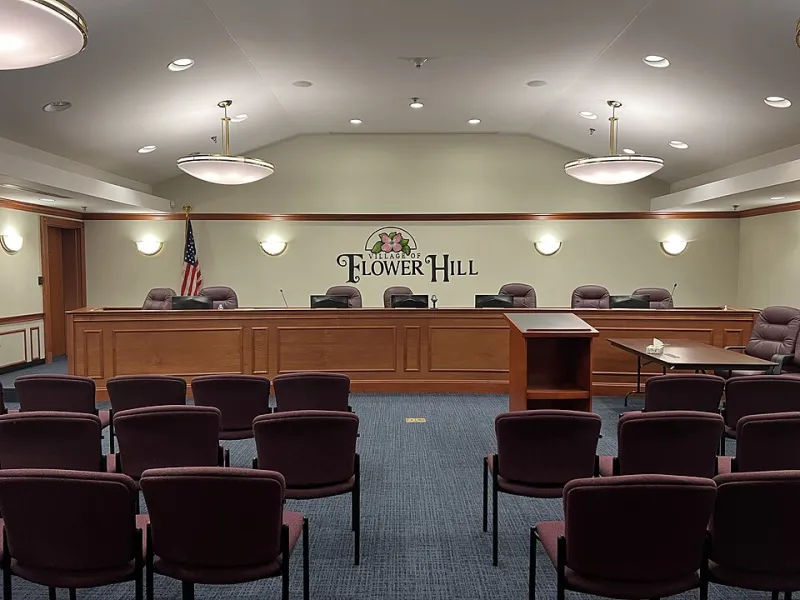
Photo: AITFFan1, CC0, via Wikimedia Commons
I have sat through a lot of folk horror. I have watched maypoles, harvest rites, standing stones and enough ominous sheep to last a lifetime. But the moment that genuinely makes my skin crawl is usually quieter: a room full of people agreeing on something. A show of hands. A seconded motion. A chair saying, “I think we’re all in favour,” while one person at the back looks like they have just realised they are the agenda item.
This is my case for the parish council as folk horror’s most underrated monster. Not because local government is secretly run by pagans — although if any institution would have a subcommittee for it, it would be a parish council — but because the genre’s dread so often comes from polite machinery. The horror is not just what the community believes. It is how the community organises itself.
The Horror of a Seconded Motion
Folk horror loves a village meeting because a village meeting is a ritual with better stationery. There is a chair. There are minutes. There is a fixed order of business. Everyone knows where to sit and what to call each other. The formality is the point. It makes the terrible thing feel normal, and normal things are much harder to resist.
A mob with torches is frightening, but you can see it coming. A planning committee approving a change to the village green is frightening in a different way. It has a paper trail. It has procedure. It has someone saying, “I’m not being funny, but we’ve always done it this way.” That sentence has ended more arguments than any curse.
The Wicker Man’s Island Is a Planning Department With Hymns
The Wicker Man is often remembered for the ending, and rightly so. But the island runs on consensus long before the wicker gets built. Lord Summerisle is not a dictator in the ordinary sense. He is a landlord, a benefactor and a man who understands that power works best when it looks like tradition. The islanders do not need to threaten Sergeant Howie. They simply close ranks, answer his questions with songs and let the community’s shared understanding do the work.
That is procedural horror. The island has a way of doing things, and Howie is the outsider who has not read the minutes. His authority means nothing because he does not understand the local constitution. The joke — and the terror — is that the island’s constitution is written in harvest songs and sexual customs. It is still a system. It still decides who belongs.
Polite Power and the Question of Belonging
This is where folk horror connects to real UK anxieties about land and belonging. Who gets a say in a village? Who is considered local? Who is a newcomer, and how long does it take to stop being one? These questions show up in planning disputes, second-home rows and arguments about footpaths, barn conversions and whether the pub should be allowed to stay a pub.
A parish council can be a genuinely good thing: a way for people to shape the place they live in. It can also be a machine for exclusion. The same procedures that protect a village green can be used to freeze out anyone who has not been there for forty years. Folk horror understands that ambiguity. It knows that community is warm and suffocating in almost equal measure.
Hot Fuzz, Village Fetes and the Comedy of Procedure
Hot Fuzz is not folk horror, but it is one of the best films about the terror of local procedure. The Neighbourhood Watch Alliance runs a village like a focus group with scythes. The joke is that respectable people in sensible fleeces will kill to preserve a “nice” place. It is funny because it is recognisable. The parish council energy is there in every meeting where someone worries about property prices and the flower show.
Cult cinema has always liked sinister committees because they are so mundane. The Wicker Man, The Blood on Satan’s Claw, Witchfinder General and countless village-based oddities all feature people who decide things together. The decision is often worse than the deed. The deed is just the follow-through.
Who Gets to Decide What Happens to a Place?
Here is the uncomfortable truth at the heart of this: folk horror’s committees are scary because they are us. They are not aliens or demons. They are neighbours with a clipboard. They are the people who know which field is old, which family is trouble and which planning application should quietly fail.
The genre’s real question is not “Will the outsider survive the ritual?” It is “Who has the authority to decide what this place is for?” That question is alive in every village hall in Britain. It is there in neighbourhood plans, in parish newsletters, in the argument about whether a second home is a home at all.
So next time you watch a folk horror film, pay attention to the meeting before the mayhem. The vote. The nod. The chair’s gentle reminder that we are all friends here. That is where the horror starts. The wicker man is just the closing item on the agenda.