Full Sun, No Cover: Folk Horror's Brightest and Cruellest Trick
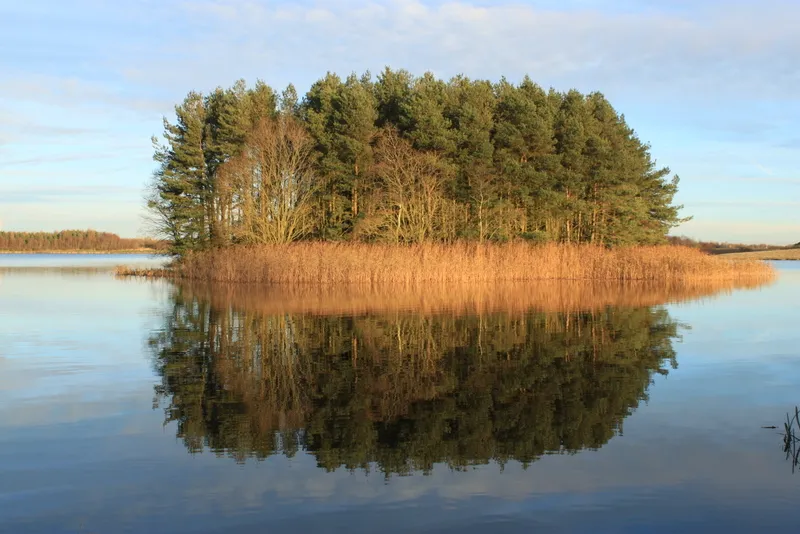
Photo: edward mcmaihin , CC BY-SA 2.0, via Wikimedia Commons
We tend to expect horror to happen in the dark. A torch beam in a cellar. A figure at the end of a corridor. A face at the window once the lamps are out. British folk horror often refuses that contract. It takes place at noon, in a field, on a beach, in a village square with the sun on everyone's face. The Wicker Man is the obvious example, but it is not the only one. Its daylight is not a happy accident of scheduling. It is the point.
The Wicker Man in plain sight
Sergeant Howie arrives on Summerisle by seaplane in bright, unremarkable light. There is no fog rolling off the water, no thunderclap, no warning sign half-hidden by branches. The harbour is ordinary. The pub is ordinary. The school is ordinary. That is what makes it unbearable. The island does not hide its secret; it performs it in front of him. Children sing about the maypole. The landlord makes jokes. The chemist explains the local beliefs with the patience of someone discussing crop rotation. Daylight means Howie cannot claim he was deceived by shadows. He can see everything. He simply cannot interpret it. The horror is not concealment but exposure.
Much of the film's most disturbing material plays out in clear light: the classroom lesson, the graveyard, the procession, the reveal of the figure at the centre of the island's calendar. Even the final sequence has the quality of a public event rather than a secret ritual. The community gathers. People watch. The sky is open. There is nowhere to hide and no dark corner for the audience to retreat into.
Shadows are easy; sunshine is cruel
Gothic horror uses darkness as a hiding place. Folk horror often uses light as an accusation. When a room is dark, the audience supplies the monster. When a village is sunlit, the audience has to look at what is actually there: ordinary people, ordinary buildings, ordinary weather, and an ordinary decision to do something terrible. Bright light removes the alibi. It also removes the comfort of mystery.
That is why so many folk horror images linger: a field in full sun, a maypole casting a short shadow, a child in a clean dress, a pub garden with a few people standing around as if nothing could possibly be wrong. The wrongness comes from the mismatch. The setting is pleasant. The light is pleasant. The social ritual is not.
A tradition of bright dread
The Wicker Man is not alone in this. Blood on Satan's Claw puts much of its unease in fields and farmyards, with the English countryside looking almost cheerful until it doesn't. Witchfinder General uses open landscape and hard daylight to make violence feel like an administrative fact rather than a gothic fantasy. A Field in England is black and white, but its terror is still outdoor terror: flat ground, wide sky, nowhere to run. More recently, Enys Men uses a grainy, sunlit island to make the everyday feel unstable. The international cousin is Midsommar, which understands that a bright, smiling community can be far more frightening than a haunted house.
The daylight tradition is not about prettiness. It is about clarity as a form of pressure. The camera is not hiding anything. The characters are not hiding anything. The audience is not being tricked by a jump scare. We are simply being asked to sit with what is visible.
The social horror of being seen
In a city, a crowd can be anonymity. In a village, daylight is surveillance. Everyone can see who arrives, who leaves, who asks the wrong question, who does not join in. The Wicker Man's community is not a secret society meeting in a cellar; it is a social organism that works in the open. The pub, the school, the post office and the harbour are all part of the same machine. Howie is watched long before he understands that he is being watched.
This is where daylight becomes a folk horror weapon rather than a cinematographic accident. Sunlight makes the community visible, but it also makes the outsider visible. The village can see him. The audience can see the village. Nobody in the frame is allowed the privacy of a shadow. The final procession is not a secret. It is a parade.
Why British weather makes it worse
British folk horror has a special relationship with good weather. We do not trust it. A hot day in a small village is a holiday postcard and a warning at the same time. The sun makes the landscape look like a brochure; then the brochure turns out to have rules. Summerisle's economy depends on sun and soil, harvest and ritual. The brightness is agricultural, not gothic. It belongs to people who work outside and know what the sky is doing.
That ordinary weather also makes the horror feel local. This is not a castle in Transylvania. It is a place that could be a ferry ride away. The light is the light of a day trip, a pub lunch, a walk along the coast. The terror begins when nothing looks scary at all.
How to shoot a sunny nightmare
Cinematographically, daylight is difficult. It flattens faces, shrinks shadows and exposes continuity. Harry Waxman's work on The Wicker Man uses that flatness well. Wide shots show the island as a working landscape rather than a maze. The sky takes up space. The sea is not romantic; it is a boundary. The frame does not offer a dark corner to hide in. It offers a view.
Sound does the rest. Birds, children, hymns, conversation, the clink of glasses. Daylight horror often sounds like a normal day. That is the trick. The image and the soundtrack agree that everything is fine. The story disagrees.
The sun as the last thing you see
Maybe the reason daylight horror lingers is that it implicates us. We watch in comfort. We are not in the dark with the monster; we are in the open with the community. A night scene says: be afraid of the dark. A daylight scene says: be afraid of the ordinary. Revisit The Wicker Man on a bright afternoon and it is not cosy. It is a warning about places where everyone can see and nobody helps. The sun never sets on Summerisle because the film never lets us leave. That is the cruelest trick of all.